Bedding Guide
How to Compare Mattress Toppers by Loft, Fill, and Feel
A topper can soften a mattress, add a little cushion, or transform the bed’s surface more substantially. But thickness alone tells only part of the story. The useful comparison is between loft, fill, and the particular feel you want—considered alongside the mattress you already own.
Begin with the mattress, not the topper
A mattress topper is often presented as a simple remedy: put a layer on the bed, improve the bed. In practice, the question is more specific. What, exactly, would you like to change? A mattress may feel too firm at the shoulders, too flat at the hips, or simply less inviting than it did when new. A topper can adjust the surface, but it cannot reliably correct every problem beneath it.
Start by describing the sensation you want, rather than choosing a product by its listed thickness or a photograph of an invitingly rumpled bed. Perhaps you want a gentler landing when you lie down. Perhaps you want a more cushioned, enveloping surface, or only a modest layer between you and a mattress that feels a little severe. These are different aims, and they point toward different combinations of loft and fill.
It also helps to consider what your current mattress does well. If it supports you comfortably but feels hard on contact, a topper may add surface cushioning without requiring a wholesale change. If the mattress is sagging, uneven, or no longer supportive, a soft layer can disguise the trouble briefly without resolving it. A topper changes the uppermost feel; it does not restore the underlying structure.
Think of the bed as a small system: mattress, topper, protector, fitted sheet, and any other layers. Each contributes something to the final sensation. A topper that seems ideal on its own may feel quite different beneath a thick protector and taut sheet. The most useful mattress topper guide therefore begins with the whole setup, not a product specification viewed in isolation.
What loft means—and what it does not
Loft is the height or fullness of a filled layer. It matters, but it is not a direct measurement of softness, support, or quality. A lofty topper may feel airy and plush, or comparatively structured, depending on what fills it and how that fill is arranged. A thinner layer can also feel notably cushioned if its material compresses readily under the body.
In other words, the number of inches gives you a rough sense of scale, not a verdict on comfort. Two toppers of similar height might behave quite differently. One may compress quickly, letting the sleeper feel more of the mattress beneath it. Another may retain more loft and create a more pronounced buffer. Construction, fill amount, and the way the material is distributed all affect the result.
Loft also interacts with body weight, sleeping position, and mattress firmness. A layer that feels substantial to one sleeper may compress more under another. Side sleepers often pay close attention to cushioning around shoulders and hips, while back and stomach sleepers may prefer a less yielding surface. These are tendencies, not rules: comfort is personal, and the same loft can produce different impressions on different beds.
When comparing topper loft, ask what happens after the initial impression. Does the layer settle into a gentle cushion, or does it continue to feel tall and buoyant? Does it make the bed easier to settle into, or does it alter the surface more than you intended? Product descriptions can help set expectations, but the relevant measure is how the construction is likely to interact with your mattress and preferences.
Fill shapes the experience
Fill is the material inside the topper, and it has a considerable influence on how the layer compresses, breathes, and recovers. Different fills can create a springy, dense, feather-soft, or buoyant sensation. Labels are useful starting points, but they do not eliminate the need to look at construction: the shell, internal compartments, and distribution of fill matter as well.
Foam constructions are often chosen for their close, cushioning feel. Depending on formulation and density, foam may contour closely or feel more responsive. Some sleepers like the sense of pressure being spread across a surface; others find close contouring too enveloping. If temperature is a concern, consider the entire design and your bedding layers rather than assuming a material name alone guarantees a particular sleep temperature.
Fiber-filled toppers can offer a softer, more familiar padded feel. Their performance depends on the fiber, the quantity used, and how effectively the construction keeps it evenly distributed. Natural feather and down fills, meanwhile, can create a plush, yielding surface with a distinctive movement beneath the body. They may require periodic fluffing to help restore an even appearance and feel.
Some filled bed layers use chambers or baffles to help control shifting. This construction can support more consistent distribution than an unstructured interior, though it does not make a layer immune to settling. Pay attention to care instructions, expected maintenance, and whether the fill and shell suit your preferences. The practical question is not merely what a topper contains, but how that material is likely to behave after repeated use.
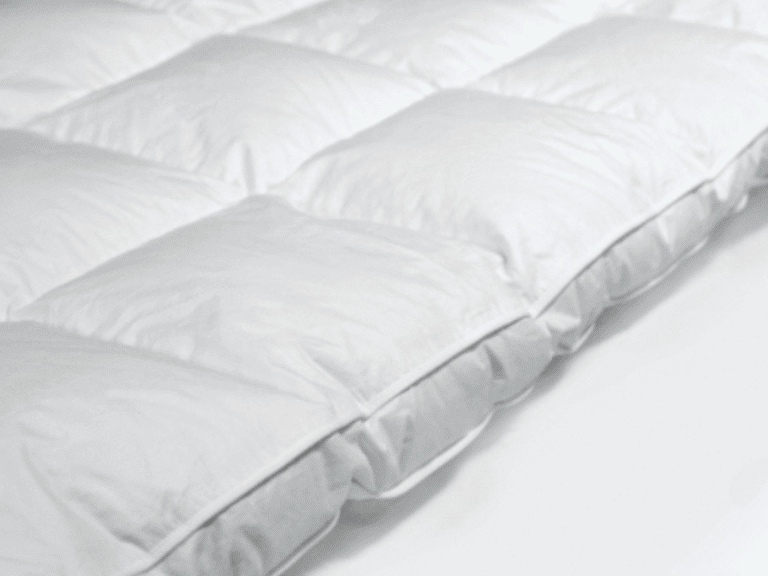
For an example of a generously lofted filled layer, the classic featherbed combines goose feathers and down in three-chambered baffles. Its five-inch loft and structured construction distinguish it from a thin pad. It is better understood as a substantial featherbed layer than as a universal stand-in for every style of mattress topper. The distinction matters: product names can group unlike things together, while construction offers a more useful description of how a bed may feel.
Compare feel in practical terms
“Soft” is an imprecise word. For one person it means a mattress surface that gives way easily; for another, a layer that feels fluffy but still keeps the body from sinking too far. When you compare options, try to describe the sensation in more useful terms: cushioned or firm, springy or still, lightly padded or deeply plush, close-contouring or airy.
It can help to imagine the first few minutes in bed and the hours that follow. Initial softness is easy to notice. The longer-term experience depends on how the fill compresses and whether the mattress continues to provide the level of support you prefer. A layer that feels appealing at first touch may prove too yielding once you settle in, while a modestly cushioned surface may feel more comfortable over time.
Consider how you move during sleep, too. Some sleepers like a surface that responds readily as they change position. Others prefer a more enveloping feel and do not mind that the bedding moves with them. Neither preference is inherently better. What matters is whether the topper’s behavior feels natural to you, especially when paired with the mattress below.
If you share a bed, the comparison grows more interesting. One person may want additional cushioning while the other wants to preserve a firmer feel. Before choosing a thick or highly yielding layer, discuss what each person hopes to change. A topper affects the shared surface, and the compromise that looks best on paper may not be the one that suits both sleepers.
Dimensions, sheets, and the rest of the bed
A topper must fit the mattress it is meant to cover. Check the bed size and the topper’s listed dimensions rather than assuming that familiar labels—queen, king, or twin—guarantee an exact match. A layer that shifts, overhangs, or leaves exposed areas can be distracting and may complicate making the bed.
Height is another practical consideration. A thick topper raises the sleeping surface, sometimes enough to affect how fitted sheets sit on the mattress. If a fitted sheet is already snug, adding loft can make it difficult to keep the corners in place. Look at the sheet’s pocket depth and account for the combined height of mattress, topper, and protector.
Sheets can also change the way the topper feels. A taut, closely fitted sheet may compress a lofty surface. A looser or more textured fabric can create a different contact sensation. Mattress protectors add another layer, sometimes subtly and sometimes noticeably. If you already have bedding you like, keep it in mind while evaluating a new topper; it will remain part of the finished bed.
Care matters because a topper is not always as easy to clean as a sheet or pillowcase. Read the manufacturer’s care guidance before buying. Some layers may require spot cleaning or professional attention rather than machine washing. A removable, washable cover can be useful, but it does not necessarily mean the inner fill itself can be laundered. Planning for ordinary upkeep is part of choosing well.
A featherbed, a bed layer, or a conventional topper?
The terms used for extra layers on a mattress can overlap. “Mattress topper” often refers broadly to a layer added to alter the surface, while “featherbed” commonly describes a filled, lofty layer with a softer, more traditional character. Products may share the practical purpose of changing a bed’s feel without being identical in materials, thickness, or construction.
The Hypodown Bed is another example of a filled layer intended to add loft and cushioning. Its blend of goose down and milkweed fiber is held in baffled boxes, with a gusseted construction. Those details help explain the product more clearly than the word “bed” alone: it is a substantial bedding layer designed to elevate the surface, rather than a simple protective pad.
When you encounter a product with an unfamiliar name, look for the elements that determine use: fill composition, construction, loft, dimensions, and care. Ask whether it is meant to sit directly on the mattress, whether it needs a cover, and how it is secured or kept in place. A product’s category label can be a useful signpost, but the details tell you what you are actually considering.
A simple comparison checklist
Before narrowing your choices, write down what you hope to change. Then compare each option against the same set of questions. This keeps the decision from being driven solely by a dramatic loft measurement or a phrase such as “cloud-like comfort,” which can mean many things.
- Current mattress: Is it too firm, lacking surface cushioning, or simply in need of a different feel?
- Desired change: Do you want a small adjustment, a plush surface, or a more substantial filled layer?
- Loft: How much height will the layer add, and how might it compress under you?
- Fill: What is inside, how is it distributed, and does that material suit your preferred feel?
- Construction: Are there chambers, baffles, quilting, or other features intended to keep the fill in place?
- Fit: Does the topper match the mattress dimensions, and can your sheets accommodate the added height?
- Care: What cleaning and maintenance will be required over time?
- Shared comfort: Will the new surface work for everyone who uses the bed?
This checklist does not produce a single correct answer. It does, however, make comparisons more precise. A high-loft featherbed and a relatively thin foam topper may both be called mattress toppers in casual conversation, yet their feel and upkeep can be quite different. The point is to compare like with like where possible, and to recognize the differences when they are not alike.
Common missteps when choosing a topper
The first is treating thickness as a scorecard. More loft can mean a more noticeable change, but not necessarily a more comfortable one. If you want only a slight adjustment, an imposing layer may change the bed more than you intended. Conversely, a thin layer may not deliver the cushioning you were seeking.
The second is expecting a topper to solve a structural problem. A layer can make a surface feel different, but a persistent dip or uneven mattress may remain perceptible underneath. Before investing in a topper, assess the condition of the mattress and its support. If the base is no longer doing its job, adding softness on top may offer only a temporary impression of improvement.
The third is overlooking the rest of the bedding. A topper that fits the mattress but makes the fitted sheet pull loose is not a complete solution. Nor is a fill that seems attractive in a description but requires care you are unlikely to provide. Comfort belongs to the nightly routine, not just the moment of purchase.
Finally, avoid assuming that one material is universally best. The right fill depends on the sensation you value, how the mattress feels beneath it, and your tolerance for maintenance. A calm, sensible comparison is more useful than chasing a single headline feature.
Choosing with confidence
The best mattress topper is not necessarily the tallest, softest, or most elaborate. It is the one that makes a deliberate change to your existing bed without creating a new inconvenience. Loft tells you how substantial a layer may be; fill helps explain its cushioning, movement, and care; and feel is the personal result of those qualities working together with your mattress.
Take inventory of the bed you have, name the adjustment you want, and check the practical details before comparing specific designs. Think beyond the first touch to fit, sheets, maintenance, and how the layer will behave over a full night. That approach turns a vague search for “more comfort” into a manageable decision—and makes it easier to recognize whether you need a thin topper, a structured featherbed, or another kind of filled layer altogether.
In the end, the bed is less a collection of specifications than a place assembled from them: mattress below, chosen layers above, and the familiar habits of sleep around it. The right addition should feel less like a dramatic intervention than a quiet correction—enough to make the surface more inviting, without obscuring what already works.